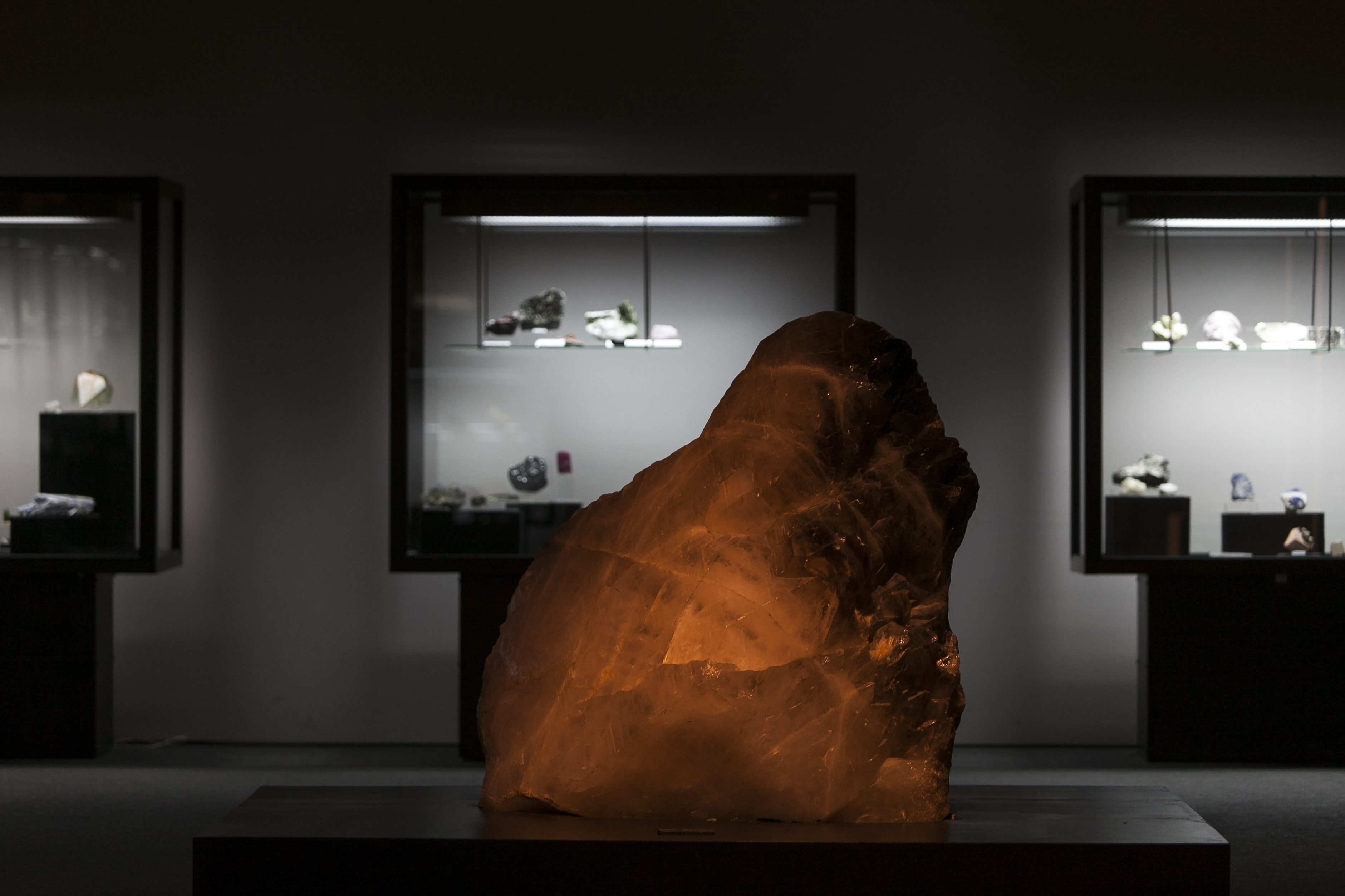
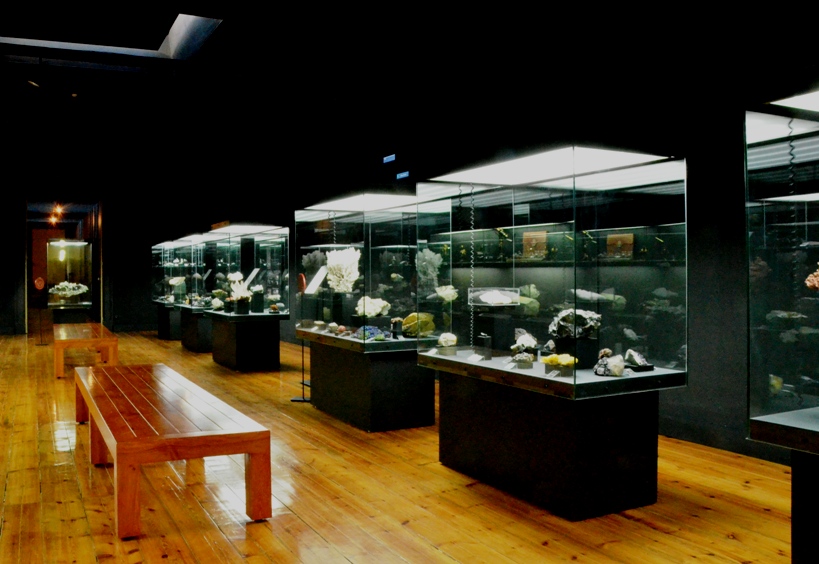
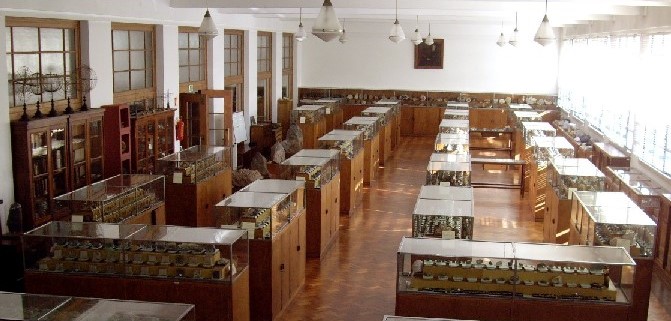
The Alfredo Bensaúde museum is located on the 3rd floor of the mines pavilion. It is a university museum primarily dedicated to Portuguese mineralogy, crystallography and petrology. Its collections comprise also relevant geologic materials ...
The Geological Museum was constituted around 1859, starting from the samples collected during the works performed by the Geological Commissions, and later by the Geological Services of Portugal and the Geological and Mining Institute. The collection of these samples (fossils, rocks, minerals and archaeological objects) is largely to the credit of the pioneers of Portuguese Geology. Carlos Ribeiro, Nery Delgado, Pereira da Costa, Paul Choffat among others. These samples comprise, today, renowned collections in the service of the scientific community, and are continuously consulted by national and foreign researchers. It is thus located in the place where Portuguese Geology and Archaeology were born, which gives it an unequalled value in the context of the History of Portuguese Science. The collection displays, the exposition equipment and the interior architecture largely reflect the type of museum from the 19th century, of which there are very few remaining in Europe. As such specialists consider it to be a "Museum of Museums." In keeping these characteristics, it has been sought to update the exhibition and improve its educational aspects, taking into account school students and non-specialist public audiences.
The Alfredo Bensaúde museum is located on the 3rd floor of the mines pavilion. It is a university museum primarily dedicated to Portuguese mineralogy, crystallography and petrology. Its collections comprise also relevant geologic materials ...
The Décio Thadeu museum is located on the 2nd floor of the mines pavilion. It is a university museum primarily dedicated to geology and mineral deposits. The collections contain an important assemblage of stratigraphy and paleontology sampl ...
The National Natural History Museum (MNHN) is an organisation that pertains to the University of Lisbon, which has the functions of preserving heritage, researching and disseminating knowledge through the use of the methods and communicatio ...